
Student Stories
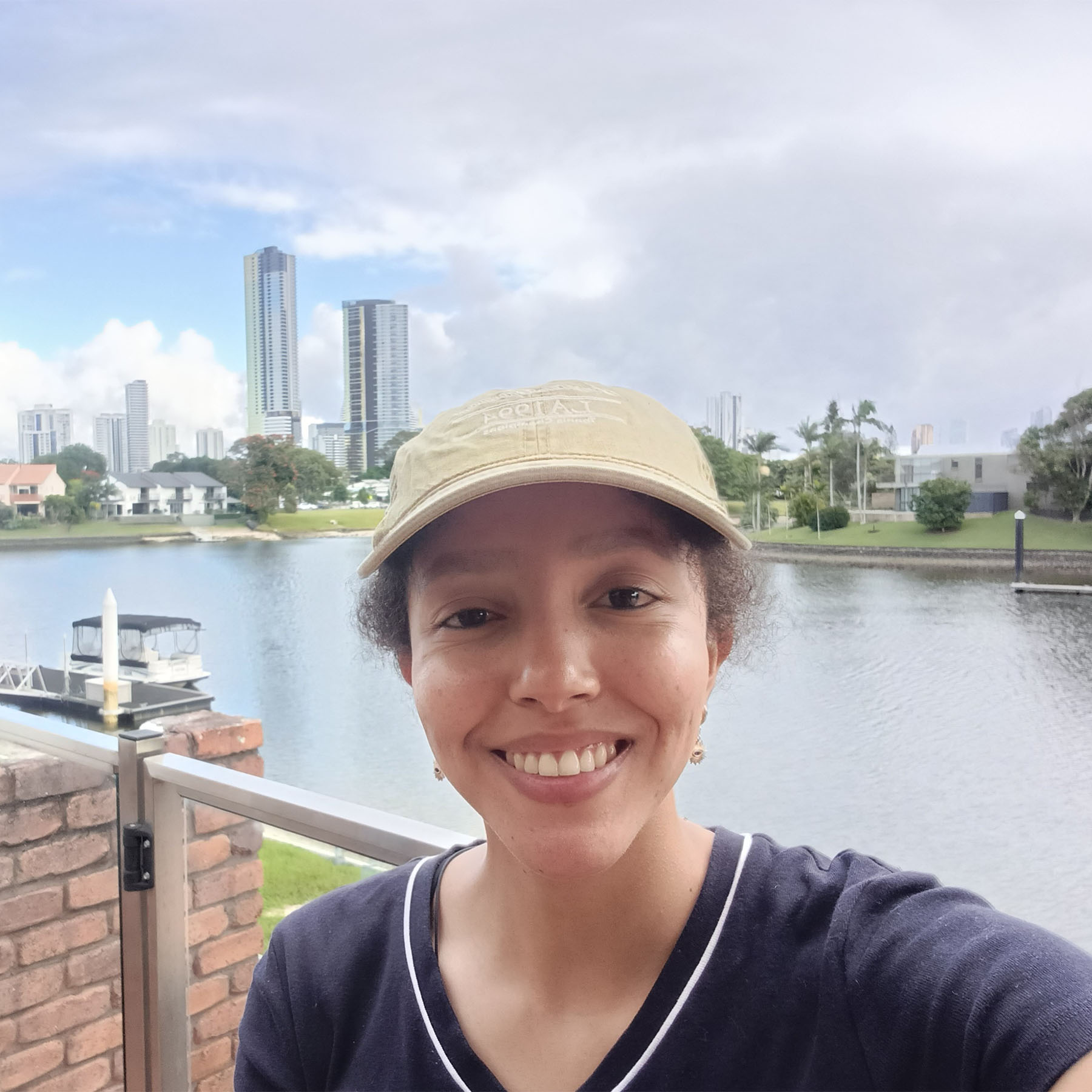
Zara Vorley
Zara Vorley is studying graduate entry medicine at Griffith University, Gold Coast. She started the Doctor of Medicine in February 2026
“I’d lived in Australia before I moved here to study medicine – I spent a year at the University of Melbourne as an exchange student while I was an undergrad at the University of Edinburgh. I’d passed through the Gold Coast, but never spent time here. My first impressions were really positive. The airport is tucked into the hinterland, so I immediately saw beautiful rainforest and views of the ocean. Plus it was the height of summer, so all in all a very pleasant and promising start!
“I’d always considered medicine, I think from when I was about 12. But I didn’t want to rush into it because it is a big commitment, and I wanted to make absolutely sure of my decision. I think it was when I was living in Melbourne that I realised I
would really love to do medicine; that I was ready to do it. I think a lot of that was getting more comfortable with the responsibility of it; that was the main part that I found daunting when I was younger.
“I studied a bachelors degree in molecular genetics at the University of Edinburgh. I did my third year in Australia, then went back to Scotland to complete my final year. Then I took a bit of a gap. I was doing research in my honours lab and asked if I could stay on in Edinburgh for a few months to help finish the project. I also did a few internships. So I’d already graduated by the time I started the application process for graduate entry medicine.
“The application process was definitely more work than I’d expected. Because each university had different requirements and different deadlines, initially I found it overwhelming to try and navigate it by myself. It was only after I’d contacted Sarah at Study Options that I started to feel like I had some direction.
“The first real hurdle was the aptitude test. I had some experience of standardised testing because initially I’d planned to apply to UK graduate medicine, so had taken the UCAT UK during my final year at Edinburgh. And because of that, when it came to choosing between the two graduate level aptitude tests I ended up going for the MCAT, because I thought the GAMSAT and the UCAT UK seemed more similar and I didn’t enjoy preparing for the UCAT UK at all! Whereas the MCAT looked different. It was very content based and I enjoy learning new things.
“Weirdly, I actually enjoyed the MCAT preparation. It was rewarding to have self-directed learning for a really big exam, and then when it went well it was very rewarding. And because I’d already finished my degree I wasn’t trying to do two things at once, I was able to just focus on the test.
“Next came the interviews, and I didn’t have any previous experience with those. Going into it, it seemed daunting, particularly the idea that you’re actually being assessed on your character and whether that’s appropriate for medicine. I thought that was more telling of whether I was a good fit for medicine in general. But after I did my first couple of interviews I felt comfortable and after I got my first offer, from the ANU, I started to enjoy interviews more. I started to see it as an opportunity to like showcase why you’re there, to be very genuine, I think that is what they look for. And the interviews are very good at bringing that out of you. So I ended up enjoying the interviews as well, even if I was scared in the beginning.
“I received offers from several Australian medical schools and it was very difficult to decide, but I felt like I was choosing to move to Australia for lifestyle reasons more than anything, because I enjoyed living there when I did my exchange. So I picked the Gold Coast because there was sun, there was the beach. I felt like the lifestyle would be really nice.
“I also liked the way the course was designed. It seemed very modern and innovative and as though they were constantly changing things and looking to improve. And I had heard that Griffith was known for being very supportive and student-centered.
“There are around 200 students in my year on the course, and most of us are at the Gold Coast campus. In the beginning, they have a selection of courses they call the foundations, which isn’t just one thing. It’s many different parts of medicine. So there’s immunology, for example, but also very specific things like burns, or shock. They try to start it gently but it definitely picks up around mid-semester into more heavy content. But they do start it slowly, I think, because they want people to like adapt.
“There are three compulsory courses. One of them is the foundations of medicine, that’s science-based and generally taught online. Then there’s introduction to clinical practice, which includes placements. You do placements in community areas, not necessarily healthcare centres. Mine, for example, was at a community shelter. And you also do communication skills, which is small group based learning, similar to a tutorial, practising how to respond with empathy and so on. And the final course is legal and ethics, which is a debate class format.
“The idea of going on placement can be nerve wracking at first, but I think one of the benefits of starting with community placements is that a lot of the people in those community centres tend to naturally be very caring people. So it’s very easy to make yourself useful. For the first half of the year our placements are community based, and then in the second half of the year they become GP placements.
“Placements are organised by the medical school. They assign you a place, but it seems to be based on where you live, they try to give you places that are easy to travel to. For the GP placements, they give you a roster of practices that they have placement positions in and you select, say, five placements in order of preference. And then they assign you based on that. So you do get some input, though the final decision of where you go is made by the school.
“When I’m not studying I have been going to the beach! From essentially anywhere you live here, the beach is not far away. Also visiting the hinterland, because there’s the beach, the city, and then right behind there’s these beautiful rainforests with lots of great hiking spots. The Gold Coast is quite close to Brisbane and there’s lots to see and do there as well. And in Queensland any journey on public transport only costs 50 cents!
“I have been impressed by the support offered to students here. As soon as you get to campus, the professors are very intentional about being open to supporting students. They’re very invested in teaching, they all seem to really love teaching, which is just nice, as a student, to feel like your learning is a top priority.
“The thing that’s probably impressed me the most, though, is how supportive the students are of each other. There’s no element of competition within my cohort. It’s very supportive. And some of my biggest ‘a-ha’ moments have come from second or third or fourth years holding one hour, two hour tutoring sessions. They are not getting anything out of it, it’s just something they want to do. That has impressed me a lot; it’s really helpful.”
Zara’s top tips for applying to graduate entry medicine
“Lean into the support offered by the university medical societies. They offer a lot of really good resources – including tutoring – or even practice exams. They also have very close links with the faculty. The other day, they did an entire anatomy formative assessment where the whole thing was entirely run by the Society. It’s an experience I hadn’t seen in the UK. So leaning into the societies has been really positive. They also bring in doctors sometimes to do lectures and workshops, which are really helpful.”
